Dino Scribble Stitch
First Impressions: Playful, Not Precious
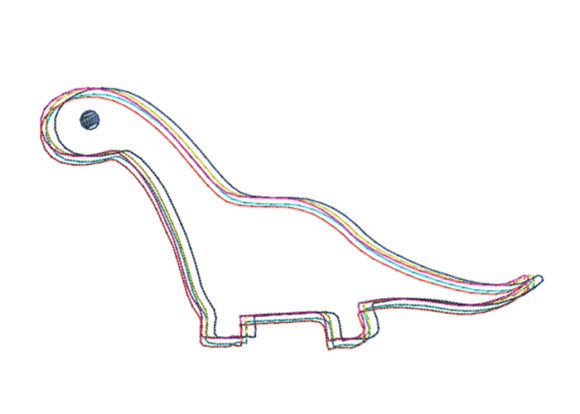
When I opened Dino Scribble Stitch, I didn’t see a stiff museum exhibit or a cartoon mascot—I saw something that breathes. It’s got that loose, hand-drawn energy: a friendly dino with slightly uneven limbs, a tilted head, and expressive, scribbly outlines. The shape is compact but not cramped—ideal for small-to-medium hoop work—and the layout feels intentional, not just centered for convenience. It leans into whimsy without tipping into cutesy overload. That matters if you’re stitching for real people who want charm *and* authenticity—not clipart disguised as craft.
A Real-World Test: Embroidering a Linen Kitchen Towel
Last week, I used Dino Scribble Stitch on a heavyweight natural linen tea towel for a local boutique’s spring collection. Why linen? Because it’s unforgiving—showing every skipped stitch, float, or density misstep. I chose the medium size (the largest would’ve overwhelmed the towel’s scale; the smallest felt too timid). With tear-away stabilizer and 40-weight cotton thread, the design stitched cleanly: smooth satin-stitched edges, balanced fill areas, and no puckering. Customers loved how the dino looked “drawn on,” not stamped on—a subtle win for handmade perception. One even asked, “Did you sketch that first?” That’s the effect you want: artistry, not automation.
Where It Shines (and Where It Needs Care)
Dino Scribble Stitch works beautifully on stable, medium-weight fabrics—think cotton canvas totes, brushed fleece sweatshirts, and structured aprons. Its open lines and moderate stitch density mean it breathes well on baby onesies and lightweight pillow covers without stiffening the fabric. As a machine embroidery design, it holds up across varied applications: embroidered patches (cut-and-sew or iron-on), personalized gifts like nursery decor or holiday stockings, and small shop merchandise where personality sells.
But don’t rush it onto tricky surfaces. On stretchy knits like t-shirts, use cutaway + topping—and test first. On dark fabric, check contrast: light thread can fade visually unless you boost saturation in your mockup or choose a richer tone. Curved surfaces like caps demand re-hooping finesse; the dino’s tail and snout sit close to the edge, so confirm your hoop clears the bill. And avoid cramming it into tiny hoops (under 3”)—fine details like the eye or claw marks lose clarity. If you’re layering it over textured fabric (like bouclé or thick terry), add a light film-type topping to keep stitches crisp.
Design Judgment: What This Adds to Your Finished Product
This isn’t just a dino—it’s a mood-setter. Dino Scribble Stitch lifts visual appeal without shouting. On a custom apparel order, it signals care: not mass-produced, but thoughtfully chosen and executed. For Etsy sellers, that translates directly to perceived value and buyer trust. A customer buying a personalized gift expects warmth and intention—and this design delivers both. It reads as professional, not amateurish, because its proportions are sound and its spacing avoids overcrowding. In branding, it fits boutiques leaning into playful minimalism (think ceramic studios, indie bookshops, or eco-kid brands) without clashing with clean typography or muted palettes.
It also supports scalability. Use it solo on a tea towel, pair it with a simple name script on a baby blanket, or repeat it subtly along a hemline. Unlike dense, highly detailed applique designs, Dino Scribble Stitch doesn’t dominate—so it works as part of a larger story, not the only voice.
Practical Designer Notes You’ll Actually Use
- Always test first—on scrap fabric matching your final project’s weight and weave. Linen behaved differently than quilting cotton, even with identical stabilizer.
- Review stitch density before running full production. Overly dense fills trap moisture and stiffen fabric; too-light runs risk gaps. This design strikes a smart middle ground—but verify on your machine.
- Check hoop size compatibility. It comes in 3 sizes—confirm which fits your most-used hoops before digitizing or prepping files.
- Inspect small details at 200% zoom in your embroidery software. The dino’s nostril and toe marks are subtle but legible—if your machine handles fine running stitch well.
- Test black-and-white mockups. Does it retain character in monochrome? Yes—it does. That’s vital for branding consistency and print-ready assets.
- Compare light vs. dark backgrounds. On navy denim, I switched from ecru to mustard thread—suddenly, the scribble felt sunnier, sharper.
- Use proper stabilizer: tear-away for stable wovens, cutaway for knits, and lightweight topping for napped or fuzzy surfaces.
- Confirm licensing. Since it’s marketed for commercial use, double-check terms before selling finished items or bundling the digital embroidery file as part of a craft business kit.
Final Thought: A Design That Serves the Maker
Dino Scribble Stitch isn’t flashy—but it’s reliable, expressive, and quietly versatile. It fits seamlessly into a craft business workflow: quick to test, easy to scale, and strong enough to anchor a product line without demanding constant attention. Whether you’re an Etsy seller building seasonal collections, a small shop owner embroidering staff aprons, or a designer sourcing design assets for printable mockups, this embroidery file earns its place by doing what great design should: making the maker look thoughtful, and the customer feel seen. It’s not just a dino—it’s a quiet confidence-builder, stitch by stitch.