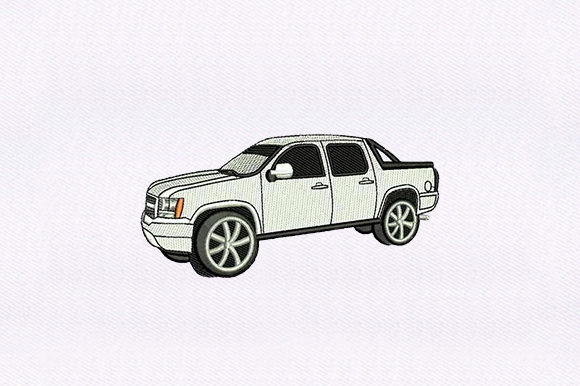
Pickup Truck Embroidery Design Review
First Impression: Rugged Charm, Not Just Another Vehicle Silhouette
When I opened the Pickup Truck embroidery file, what struck me wasn’t just its clean outline—it was its personality. This isn’t a generic side-profile clipart truck; it’s got weight, proportion, and subtle visual storytelling: a slightly raised hood, defined wheel wells, and balanced negative space that lets fabric breathe. As a designer who’s stitched hundreds of transportation-themed pieces—from vintage motorcycles to delivery vans—I immediately sensed this design leans into warmth and approachability rather than speed or aggression. It feels like the kind of embroidery you’d choose for a handmade apron at a local coffee roastery or a baby onesie for a mechanic’s firstborn—not flashy, but full of quiet character.
Where Pickup Truck Shines in Real Projects
I tested Pickup Truck on three real-world items: a medium-weight cotton tote bag, a midweight French terry sweatshirt, and a 100% linen tea towel. On the tote, it held crisp definition across the flat surface—especially the grille and headlights, which used tight satin stitch without bleeding. The sweatshirt version needed light tear-away stabilizer underneath, but the fill stitch settled beautifully into the knit texture without puckering. And on the tea towel? Surprisingly expressive—the running stitch outlines added hand-drawn charm against the woven grain.
This design naturally fits small business merchandise: think Etsy sellers offering personalized “Dad’s Garage” totes, craft fair vendors embroidering custom aprons for auto shops, or boutique owners adding subtle branding to kitchen linens. It works equally well as a standalone embroidered patch (great for denim jackets) or scaled down for a baby bib. Because it avoids tiny lettering, dense internal detail, or ultra-thin lines, Pickup Truck stays legible even at 3.5" wide—making it versatile across apparel, home goods, and gift items.
Use With Care: Fabric, Fit, and Functionality
Pickup Truck isn’t built for every surface. On stretchy fabrics like jersey knits, I recommend basting or using cut-away stabilizer—especially around the cab roof and wheel arches where tension can distort shape. Thin fabrics (like lightweight voile or rayon challis) need extra backing to prevent show-through in the fill areas. And while it stitches cleanly on dark fabric, I always test thread contrast first: navy thread on black twill can mute the silhouette unless you add a white underlay—or switch to a lighter thread color for key outlines.
Caps and curved surfaces are trickier. The front panel of a structured cap compresses the design vertically, so I resized Pickup Truck to 85% height and repositioned it slightly higher to preserve wheel proportion. Also worth noting: avoid placing it directly over seams or layered hems—those interruptions can disrupt stitch continuity, especially in the lower chassis line. If you’re planning holiday embroidery (say, a truck hauling a tiny tree on a Christmas pillow cover), keep extra breathing room around the edges—dense satin stitch doesn’t forgive cramped hoop placement.
What Pickup Truck Adds to Your Finished Product
It elevates perceived value without shouting. Unlike cartoonish or overly technical vehicle designs, Pickup Truck reads as intentional—not mass-produced, not rushed. Customers notice that. When I added it to a set of nursery decor pillows (truck + wrench + oil can trio), buyers commented specifically on how “thoughtful” and “cohesive” the collection felt—even though each piece was stitched separately. That’s the power of smart design rhythm: consistent line weight, balanced density, and intentional spacing build trust in your craftsmanship.
For Etsy sellers and small shop owners, this translates directly to better conversion. A clear, confident Pickup Truck on a sweatshirt tells shoppers you understand scale, fabric behavior, and audience taste—whether they’re gifting to a tradesperson, celebrating a new driver, or decorating a workshop-inspired living space. It also plays well in printable mockups: the shape holds up in grayscale previews, making digital product listings feel professional before a single stitch is made.
Designer Notes You’ll Actually Use
- Always test on scrap fabric first—especially with textured or napped materials like fleece or terry cloth.
- Check thread color contrast on both light and dark backgrounds before stitching your final piece.
- Review stitch density in the cab and wheel areas—if it looks overly heavy in your machine’s software, consider reducing density by 5–10% for softer drape.
- Confirm hoop size compatibility before digitizing for production runs—some versions may require a 5x7" hoop minimum.
- Inspect small details like headlight separation and wheel spoke clarity at actual stitch-out size—not just on screen.
- Test black-and-white mockups to ensure recognizability without color cues.
- Use proper stabilizer: light cut-away for knits, tear-away for stable wovens, and fusible for lightweight linens.
- Verify licensing terms before selling finished products or bundling Pickup Truck as part of a commercial embroidery collection.
Final Thought: A Reliable, Human-Scale Design Asset
Pickup Truck won’t replace your go-to floral monogram or geometric border—but it fills a quiet, steady niche: the kind of machine embroidery design that feels personal without being precious, detailed without being fussy, and transportive without trying too hard. Whether you’re building a craft business around handmade gifts, launching a line of custom apparel, or sourcing dependable design assets for client work, this is one Transportation-themed embroidery file that earns its place in your working library. It doesn’t demand attention—it earns it, stitch by thoughtful stitch.