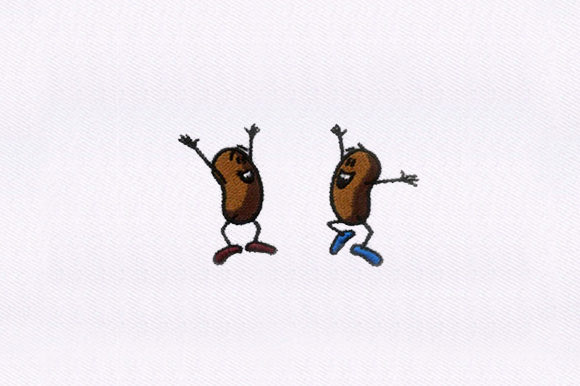
Jumping Beans: A Playful, Practical Embroidery Design Worth Your Thread
As a designer who’s stitched hundreds of machine embroidery designs onto everything from baby onesies to boutique aprons, I opened Jumping Beans expecting charm—and found something more: quiet versatility. It’s not flashy, but it’s thoughtful. The design captures that lighthearted, slightly mischievous energy of its namesake—curved beans mid-bounce, friendly curves, soft spacing, and just enough detail to read clearly at 3–4 inches wide. No sharp angles or fussy outlines. Just clean, approachable food-themed embroidery with personality.
First Impressions: Why It Feels Like a Real Design Choice, Not Just a Clip Art Swap
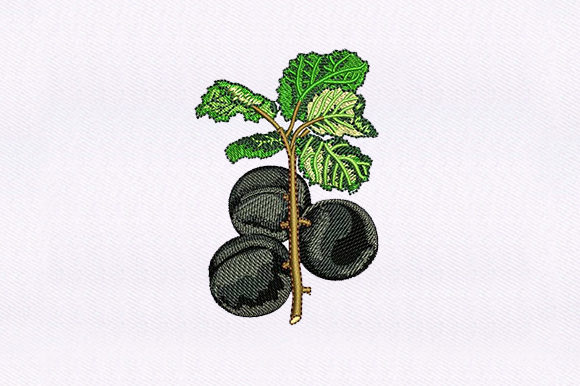
This isn’t a generic “bean” silhouette slapped into an embroidery file. Jumping Beans has rhythm—three beans arranged with subtle asymmetry, each tilted differently, some overlapping just enough to suggest motion without crowding. The stitch work leans into satin stitch for smooth bean bodies and light fill stitch for gentle shadows. There’s no dense filler or excessive underlay, which means it breathes on fabric instead of flattening it. That matters when you’re stitching for real people—not just previewing in software.
I tested it on a natural cotton tea towel first—light stabilizer, standard 40-weight thread—and the result was crisp, cheerful, and unmistakably handmade. Customers don’t buy “food embroidery.” They buy warmth, nostalgia, and intention. Jumping Beans delivers that quietly.
Where It Shines (and Where It Asks for Thoughtful Handling)
Jumping Beans is especially strong for small-batch, story-driven products. Think: a set of embroidered kitchen towels for a local café’s grand opening, personalized baby bibs for a boutique nursery line, or a limited-run tote bag collection for a farmers’ market stall. Its scale and tone make it ideal for personalized gifts where playfulness meets sincerity—like a “Bean There, Done That” sweatshirt for a coffee roaster’s staff or a tiny Jumping Beans patch sewn onto a handmade denim apron.
It holds up beautifully on medium-weight fabrics: cotton twill, canvas, fleece-backed sweatshirts, and even lightweight linen blends. On a relaxed-fit crewneck, centered above the pocket, it reads as confident—not cutesy. On a baby onesie? Sweet, but not saccharine. That balance is rare.
But here’s where attention matters: Jumping Beans doesn’t love tight curves or ultra-thin substrates. Avoid placing it directly over seams, near elastic hems, or on highly stretchy knits without testing. On caps or curved surfaces, the outer beans may distort slightly unless hooped with precision and stabilized with cutaway + tear-away combo. And while it’s legible at 2.5 inches, going smaller than that risks losing the bounce in the beans—the very thing that makes it special.
Real-World Use: From Mockup to Marketplace
Last week, I prepped a batch of organic cotton tote bags for a local food co-op’s holiday pop-up. We chose Jumping Beans as the anchor motif—small, centered, stitched in warm oat and charcoal thread. Before committing, I ran three quick checks: a black-and-white printable mockup (to confirm contrast), a test stitch on scrap fabric (to verify thread tension and stabilizer choice), and a side-by-side comparison on both light and dark backgrounds. The design held up cleanly on both—and crucially, looked intentional, not decorative filler.
That intentionality translates directly to buyer trust. When your Etsy seller page shows Jumping Beans stitched on a real tea towel—not just a glossy PNG—it signals craftsmanship. Same goes for craft fair displays or Instagram product reels: this design moves well in motion, reads at arm’s length, and feels cohesive whether used solo or paired with simple text (“Grow Slow,” “Good Things Take Time”).
What to Verify Before You Stitch—or Sell
- Test the embroidery file on scrap fabric first—especially if using textured or dark fabric. Thread color contrast can shift dramatically under real light.
- Review stitch density. While Jumping Beans avoids heavy fill, check for any tight clusters around bean curves that might pucker delicate weaves.
- Confirm hoop size compatibility. If your machine maxes out at 4x4”, ensure the full layout fits comfortably—no trimming corners.
- Inspect small details in your embroidery software: are bean highlights distinct? Do connecting lines between elements stay clean, or do they blur on low-res previews?
- Use proper stabilizer. Medium-weight cutaway works best for apparel; tear-away suffices for stable home goods like pillow covers or oven mitts.
- Check licensing. Since Jumping Beans is marketed as a machine embroidery design for commercial use, confirm whether resale of finished products (e.g., embroidered patches or sweatshirts) is permitted—and whether digital redistribution (as part of a design bundle) is allowed.
Final Thought: It’s Not Just Food. It’s Feeling.
In a sea of overdesigned, oversaturated embroidery files, Jumping Beans stands out by doing less—and meaning more. It’s not trying to be gourmet or minimalist or ironic. It’s simply joyful, grounded, and easy to love. For the craft business owner building a brand around authenticity, for the Etsy seller curating meaningful handmade products, for the apparel decorator choosing motifs that resonate beyond trend cycles—this is the kind of embroidery design that earns repeat orders and word-of-mouth shares.
Use it where warmth matters more than wow. Stitch it where handmade presentation builds connection—not just decoration. And always, always test it first. Because the best finished product starts not with perfect software rendering, but with one thoughtful stitch on real fabric.