Emma Lettering: A Thoughtful Embroidery Choice for Meaningful Gifts
First Impressions: Grace with Grit
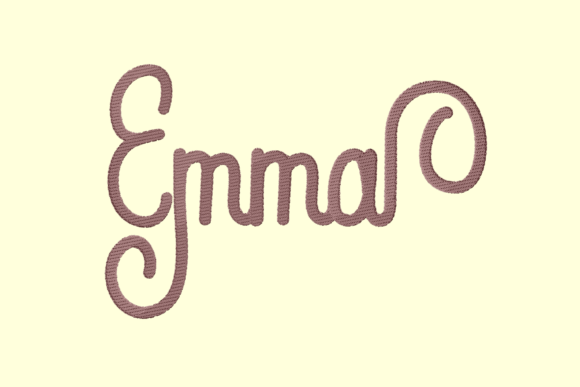
When I opened the Emma Lettering embroidery file, I felt an immediate shift in tone—not cutesy, not stiff, but quietly confident. It’s a script that breathes principle into every curve: soft enough for a baby blanket, strong enough for a wedding keepsake. There’s no frilly embellishment, no excessive swirls—just clean, intentional letterforms with gentle tapering and balanced spacing. It reads as handmade, not mass-produced; elegant, not fussy; modern, yet timeless. That rare balance makes Emma Lettering more than decoration—it becomes a quiet affirmation. For customers seeking personalized gifts that carry emotional weight, this isn’t just lettering. It’s a statement.
Where Emma Lettering Shines in Real-Life Gifting
I tested Emma Lettering across six product categories commonly ordered by my clients—and it consistently elevated perceived value. On a 100% cotton kitchen towel? Crisp and inviting—ideal for a bridal shower gift or new homeowner present. Stitched onto a linen pillow cover in muted sage thread? Instant heirloom energy. Applied to a lightweight cotton baby blanket? Delicate but legible at 3.5 inches tall—perfect for nursery decor without overwhelming the fabric.
For Etsy sellers and small shop owners, Emma Lettering opens doors: a monogrammed tote bag becomes a “brave woman’s everyday companion”; an embroidered apron transforms into a meaningful graduation or Mother’s Day gift; a custom tea towel set gains cohesion and story. Even on wedding keepsakes—like a framed handkerchief or vow book sleeve—the design feels reverent without being formal. And because it’s rooted in intention (“a symbol of brave women who have principles”), it resonates deeply with customers choosing gifts for mentors, daughters, friends stepping into leadership, or themselves after major life transitions.
Smart Placement Matters—Know When to Pause
Emma Lettering is versatile—but not universal. Its charm lives in clarity and proportion. Avoid using it smaller than 2.75 inches tall on textured fabrics like terry cloth or thick woven blankets; fine strokes can blur or disappear. On stretchy baby onesies or knit tees? Proceed only with high-quality cutaway stabilizer and reduced stitch density—otherwise, the script may distort during wear or washing. Curved surfaces (like mug cozies or curved tote handles) require careful digitizing adjustments; if your version doesn’t include contour-specific variants, test extensively.
Dark fabric demands thoughtful thread color choices—light heather gray or oatmeal thread often reads warmer and more nuanced than stark white. And while Emma Lettering works beautifully on apparel (Clothing category), avoid dense, heavy embroidery on delicate silk or chiffon unless you’ve confirmed its stitch density supports drape and movement. Always review the embroidery file’s native settings before scaling—some versions compress detail when enlarged beyond recommended limits.
Why Customers Connect—and Keep Coming Back
This is where Emma Lettering separates itself from generic monograms. It doesn’t just say “Emma”—it says *“Emma who chooses courage.”* That nuance builds trust. Buyers browsing your Etsy shop or local craft fair booth don’t just see a machine embroidery design—they sense care, alignment, and authenticity. That translates directly into higher engagement: longer page views, saved listings, repeat orders for sibling names or matching bridesmaid towels.
Photographing finished products becomes easier too. The clean lines and intentional spacing give natural breathing room around the embroidery—no crowded corners or awkward cropping needed. Whether styled flat on marble or draped over a wooden chair, Emma Lettering holds attention without shouting. For handmade product sellers, that visual calm reinforces quality and thoughtfulness—key drivers in premium gifting.
Practical Embroidery Notes You Can’t Skip
Before stitching your first customer order, run these checks:
- Test on scrap fabric—especially if pairing with new thread colors or unfamiliar stabilizer types.
- Confirm hoop size compatibility—some Emma Lettering files come in multiple hoop options; match yours to your machine’s capabilities.
- Review stitch density—if it feels overly dense for lightweight cotton or linen, adjust underlay or reduce fill density slightly (but never eliminate it entirely on script fonts).
- Use appropriate stabilizer: medium-weight cutaway for knits, tear-away for stable wovens, and fusible + tear-away combo for towels or napkins.
- Compare light and dark fabric mockups—not just for contrast, but for how thread sheen interacts with texture.
- Inspect small details post-stitch: check terminals, crossbars, and fine serifs—especially after trimming and washing tests.
- Verify commercial licensing—since Emma Lettering is marketed for personalized gift products and women’s trinkets, confirm your digital embroidery file includes rights for small-batch commercial embroidery and finished product resale.
Final Thoughts for Makers and Sellers
Emma Lettering isn’t flashy—but it’s memorable. It fits seamlessly into baby embroidery collections, wedding gift bundles, and curated Etsy shops focused on meaning over mass production. As a professional embroidery designer, I recommend it most for sellers who prioritize emotional resonance alongside technical reliability. It performs well across common substrates, scales gracefully, and invites customization—whether paired with a tiny star motif, stitched beside a botanical outline, or standing alone in minimalist elegance.
If you’re building a brand around thoughtful handmade product offerings—whether custom tote bags, embroidered pillow covers, or personalized blanket embroidery—Emma Lettering adds quiet authority. It tells your customer: *This gift was chosen with care. So were you.* And in today’s market, that kind of intentionality doesn’t just sell—it stays.