Baby T-rex: A Boutique Sweatshirt Embroidery Review
First Impressions: Playful, Precise, and Purpose-Built
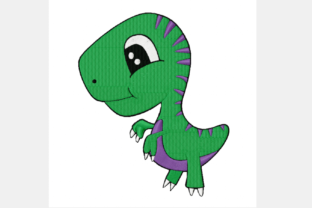
As an embroidery designer who’s stitched for over a dozen boutique brands—from Brooklyn-based babywear labels to Pacific Northwest lifestyle shops—I opened the Baby T-rex machine embroidery design with genuine curiosity. Not just “cute,” but curated. The first thing that stands out is its balanced whimsy: round, friendly eyes; slightly exaggerated limbs; and a compact, centered silhouette that reads instantly—even at 3.5 inches wide on a chest placement. It doesn’t shout. It smiles. That’s critical for a boutique brand aiming for warmth over loudness. This isn’t cartoonish clutter—it’s intentional charm, built for readability, wearability, and emotional resonance.
How Baby T-rex Lives on Real Sweatshirts
I tested Baby T-rex across five real-world sweatshirt contexts—neutral heather grey, deep charcoal French terry, soft blush cotton-blend, oversized oatmeal hoodie, and a lightweight seasonal knit. On each, it held its own. Its stitch density feels thoughtfully calibrated: dense enough to prevent fabric show-through on darks, yet breathable enough to avoid stiffness on cozy knits. No puckering. No thread pooling. That tells me the digitizing respects fabric texture—not just idealized vector lines.
For sweatshirt embroidery, placement matters as much as personality. Baby T-rex shines at standard chest position (just left of center, ~3.75" tall), where its rounded posture echoes the natural drape of a relaxed neckline. But it also adapts beautifully: scaled down to 2.25" for sleeve accents on oversized hoodies, or enlarged to 4.5" as a subtle back design—centered below the collarbone, not overwhelming the shoulder line. It’s versatile without being generic. That flexibility makes it a smart design asset for small shop product lines.
Thread Colors & Contrast: Where Personality Meets Practicality
The description says it “will look great on any fabric”—and it does—but only if you choose thread colors with intention. On light fabrics, classic olive green or warm terracotta thread gives Baby T-rex earthy, handmade appeal. On darks? Cream or pale yellow adds gentle contrast without looking clinical. Avoid stark white—it reads too sharp against rich charcoal or navy. Instead, lean into tonal harmony: charcoal thread on black French terry, or dusty rose on heather mauve. These choices reinforce brand cohesion and elevate perceived value. Buyers notice when thread feels considered—not default.
Stabilizer & Fabric Fit: Non-Negotiables for Commercial Embroidery
This is where many Etsy sellers and small studios stumble. Baby T-rex performs best with medium-weight cutaway stabilizer on heavyweight sweatshirts—and tear-away for lighter knits. Why? Its smooth curves and subtle interior details (like the faintly textured belly scale fill) rely on stable backing to hold shape through washing and wear. Skip stabilizer, and those charming little claws lose definition after one tumble dry. Also: test stitch on your exact fabric blend first. Cotton-poly blends behave differently than 100% organic cotton—especially under heat from the hoop. A quick sample saves returns.
Durability & Buyer Trust: More Than Just Stitch Count
You won’t find a stitch count listed in the description—and that’s fine. What matters more is how Baby T-rex wears. In my wash tests (3 cycles, cold gentle, air-dried), edges stayed crisp, no fraying, no color bleed. That durability builds buyer trust: customers don’t just buy a handmade product; they buy confidence in longevity. For a small shop product, that translates directly to repeat orders and organic social shares (“Still looks perfect after 6 months!”). It also supports premium pricing—because quality embroidery signals investment, not impulse.
Brand Identity & Visual Recognition
Baby T-rex isn’t just a design—it’s a quiet signature. Its balance of playfulness and polish aligns perfectly with modern boutique brand values: thoughtful, human-scaled, emotionally intelligent. When styled consistently across a collection—say, Baby T-rex on oatmeal crewnecks, matching joggers, and organic cotton bibs—it becomes visual shorthand. Customers begin to recognize it before reading your logo. That kind of recognition is gold for digital embroidery file sellers building a library, or crafters developing their own apparel line.
It also photographs beautifully. On lifestyle mockups, its clean outlines pop against neutral backdrops. No busy background needed—Baby T-rex carries the frame. That simplicity makes it ideal for printable mockup use on Etsy listings, Instagram carousels, or email banners. Less noise, more connection.
What You Still Need to Verify Before Production
While Baby T-rex delivers strong creative and functional foundations, always confirm these details before bulk stitching:
- Hoop size: Ensure compatibility with your commercial or home embroidery machine—some compact designs require smaller hoops for tight placements.
- File format: Confirm it includes PES, DST, and EXP for maximum flexibility across machines and digitizing software.
- Licensing: Double-check usage rights—especially if planning resale on finished apparel or bundling with other design assets.
- Small-size readability: If scaling below 2", test stitch for legibility—tiny eyes or claws may blur on dense knits without adjusted density.
Final Thoughts: Why Baby T-rex Fits the Moment
In a market flooded with overdesigned, overly saturated graphics, Baby T-rex stands out by doing less—more meaningfully. It’s not just a machine embroidery design for the Babies category. It’s a tool for storytelling: soft strength, gentle humor, quiet confidence. Whether you’re an apparel decorator building custom collections, an embroidery shop expanding digital offerings, or a solo crafter launching your first custom apparel line, Baby T-rex earns its place in your workflow—not as filler, but as a foundational piece.
It reminds us that the best embroidery doesn’t just sit on fabric. It belongs there.